GLOBALISATION IS MY TOPIC. I struggle to understand Globalisation agendas/ethics . My primary question: Is globalisation good or bad??
Michael Bond's summary of Globalisation is exponential growth.
"Truth be told, there are not a lot of natural cases in which exponential growth is exhibited. An exponential growth model assumes that there is an infinite amount of resources from which to draw."
(Quote: no byline from Members.Optusnet exponential link)

Tuesday, May 20, 2008

Papua New Guinea Solomon Islands and East Timor
Map Available http://www.catholicnet.com/solomon/Image13.jpg

PNG remains a very poor country.PNG has largely not been able to exploit its natural resources for its people’s benefit and to help ameliorate its debt burden. Around 40 percent of Papuan New Guineans live on less that US$1 per day, many people do not have access to essential services and basic infrastructure is poor.
The New Economics Foundation calculates that Papua New Guinea requires 85% debt cancellation in order for the government to meet the basic needs of its citizens, such as health, education and infrastructure, without taxing those living below an ethical poverty line of $3 a day.
available http://www.jubileedebtcampaign.org.uk/Papua%20New%20Guinea+4061.twl
Jubilee Debt Campaign. Fact sheet: Papua New guinea [accessed 20/05/2008]
Solomon Islands is one of the least developed among ADB‘s Pacific developing member countries (PDMCs), ranking at the lowest among all Pacific Islands in the United Nations Human Development Index (HDI).Economic growth continued at about 5% in 2004, driven by logging of the natural forest at an unsustainable rate and expansion in copra production, fishing and cocoa.
Total official public sector debt in February 2005 stood at about SI$1700 million (94% of GDP), with external and domestic debt equivalent to 66% and 28% of GDP, respectively.
Available http://www.adb.org/SolomonIslands/country-info.asp
Asian Development Bank Fact sheet: Solomon Islands [accessed 20/05/2008]
East Timor, a country of just over a million people, is one of the world's poorest nations, ranking below Congo and Sudan in its indicators of human development*. It is the poorest country in Asia. Life expectancy is 56 years, the adult literacy rate is only 58 per cent and one child in ten can expect to die before they reach five years of age.
Australia has been one of East Timor's strongest supporters and partners in this undertaking since 1999. Between 1999 and June 2007, Australia has provided over $570 million in Official Development Assistance (ODA) to East Timor and, after lifting its aid significantly in 2006-07 to meet the needs of the security and humanitarian crisis, expects to invest a further $72.8 million in 2007-08. Available http://www.ausaid.gov.au/country/country.cfm?CountryId=911
Australian Goverment Fact Sheet: AusAid, East Timor [accessed 20/05/2008]

Wednesday, May 14, 2008


Japan is Australia’s leading market for exports of goods and services ($35.5 billion in 2006-07), followed by China ($26.4 billion), the United States ($15.5 billion), the Republic of Korea ($14.9 billion) and New Zealand ($12.7 billion).
The total volume of shipping containers passing through the city's port between July and December 2006 was 13.9 million tonnes.
Australia’s major import items were passenger motor vehicles, crude petroleum, personal travel services (excluding education), freight transportation services, refined petroleum, and computers. The United States was Australia’s largest source of imports, followed by China and Japan. goto trade
Australia's black coal exports were worth around $A22.5 billion in 2006-07, a decrease of about 8% on the record $A24.5 billion figure for 2005-06. Black coal remains Australia's largest commodity export, representing around 19 per cent of Australia's total commodity exports in 2005-06 - see chart below left. Goto Coal
Over the decade to 2006, Australia was the 5th largest net recipient of FDI in the OECD (OECD 2007). FDI is foreign direct investment...OECD Organisation for Economic Co-operation and Development. A collection of 30 member states that use the organisation as a discussion forum to further their aims for a free market system

Sunday, May 11, 2008


Welcome to the Asia-Pacific Economic Co-operation summit, Sydney: a $300 million week-long extravaganza, featuring the most powerful leaders from the world's most dynamic economic region. Bob Hawke proposed it. The first meeting was held in Canberra's Hyatt Hotel in 1989. Goto astory
The 21 APEC leaders have posed for the traditional group photo on the steps of the Sydney Opera House wearing brown tailor made knee-length Driza-Bone coats. The leaders had lunch today at Guillaume at Bennelong next to the Opera House. Goto full story
Julies comments: Max Weber interactionalism: APEC leaders in the staged performance of group photo reveals the cultural norm of the APEC institution. The scripted role uses national costume as the symbol and reveals symbolic meanings of unity, social cohesion and "orderly society" state of the APEX unit.
Julies comments: Conflict theory: Market perspective and economic development and trade deals .Why do we need the dominant ideology to "keep expanding world economies and the GPD of each country as an essential anti poverty tool" to eradicate poverty from poorer countries ?? When will the capitalistic countries stop eyeing and coveting cheap labour, and using collectivism of the earth's abundant resources and using other countries fertile soils for monoculture crops. APEC represents hegemony at its institutional best. Anti globalisation players recognise the worth of the "essential anti poverty tool" as false ideology. Where does the ideological ascendency (on globalisation ) prevail ?? Is it in Australia's climate change policy or the UN or the anti globalisation players ??
Excerp from APEC......3. We are confident that robust economic growth will continue and that we can make further progress in our goal to reduce poverty and increase living standards....5. APEC economies account for almost fifty per cent of world trade.....7. Economic growth in the region has outstripped the rest of the world: number of people living in poverty has halved since 1989.
Climate Change Policy: Australian Climate Change Policy and its Implications for AP6 Countries Bejing, April 2007 (page 1, 9, ) goto Climate change policy
RMIT: Globalisation Department : An adequately understood notion of causality is central to our attempts to tell better stories about globalization.
goto Map
Biotechnology Strategy for Agriculture, Food and Fibre Goto DAFF
Developing an innovative culture will provide the pathway for Australian agriculture to overcome varied challenges and fully exploit the many opportunities ahead. Biotechnology - specifically the application of agricultural biotechnology - is one of many tools the sector will need to remain ahead of the game.
Theme 1: framework for developing new agriculture, food and fibre industries....recognises that many areas of biotechnology are potentially highly relevant.....foregoing these developments could cost Australian agriculture dearly.....Theme 2: the need for communication with rural and regional Australia (their decisions)....Themes 3 and 4: the importance (regulations) to ensure the safety of new applications of biotechnology in the agriculture, food and fibre sectors.,...Theme 5: community and industry acceptance of future commercial applications of agricultural biotechnology hinges on the outcomes of current debates about GM crops....Theme 6: Department’s ongoing role with other agencies to facilitate market access for both existing producers of non-biotechnology products & producers of biotechnology products.

Wednesday, May 7, 2008

Australian 2020 Summit:
Under Australia's future security and prosperity
* Closer economic and intergration with the pacific
*Closer engagement with major economies: US, Japan, China ,India
* A comprehensive National strategy plan for Asian literacy in Australia, to enhance our engagement in trade, security and people to people exchanges
So what does this all mean in terms of the globalisation effect ??
A closer look at globalisation:
There are so many conflicting theories around around about the benefits and effects of globalism.
What kind of economic growth do the "experts" recommend ?
Apec hold a pro globalisation approach and argue against the Stern reports recommendation to slow GHG's and reduce global growth.
I believe that eradication of poverty in poor countries can only be addressed when Goverments of those countries work closely with the World bank and International Aid agencies to return increased revenue in the form of education and health programs, to the the poorest people.
THE Stern Report: (Poverty indicator: less that $2 per day) Goto Stern
The impacts of climate change will exacerbate poverty – in particular through its effects on health, income and future growth prospects (page 114). Poor people are consequently highly sensitive to the degradation and destruction of these natural assets and systems by climate change. For example, dieback of large areas of forest – some climate models show strong drying over the Amazon if global temperature increases by more than 2°C (page 95)

FROM APEC (this is APEC's quote on the Stern Report):
In either case, the policy measure in question should impose a level of restriction on man-made GHG emissions that would stabilise the concentration of GHGs in the atmosphere at no more than 550 parts per million. In its view, doing so was ‘…an essential foundation for climate-change policy’ (Stern 2006, p. xviii). Goto apec report
APEC goto: APEC
For the first time in human history, it is feasible to contemplate the eradication of poverty. Yet the Stern Report and the Garnaut Review on climate change are advocating an approach to climate change that would increase, not decrease, poverty.
In the developing world, the percentage of the population living on less than US$1 a day has fallen from 40 % in 1981 to 18 % in 2004.
In Sub-Saharan Africa, the population in extreme poverty has remained static at 41 % since 1981; the region accounting for 30 percent of the world’s extreme poor.
They are part of the bottom billion poor, Oxford Professor, Paul Collier, who points out that economic growth is the essential anti-poverty tool.
Research (World Bank & IMF):a one % growth in GDP leads to a 1.3 % reduction in poverty.
Global Education Overview:
Global income is more than $31 trillion a year, but 1.2 billion people of the world's population earn less than $1 a day. 80% of the global population earns only 20% of global income.
The 3 billion people living in the 24 developing countries that increased their integration into the world economy enjoyed an average 5% growth rate in income per capita, longer life expectancy and better schooling.
Two billion people, living in sub-Saharan Africa, Middle East, and the former Soviet Union, are unable to increase their integration into the world economy: their economies have contracted, poverty has risen, education levels have risen less rapidly than in globalised countries.

Globalisation Disadvantages:
(1) Agricultural seed companies are destroying the biodiversity of the planet, and depriving subsistence farmers of their livelihood.
(2) Globalisation has enabled the introduction of cigarettes and tobacco to developing countries, with major adverse health and financial costs.
(3) The major economic powers have a major influence in the institutions of globalisation, like the WTO, and this can work against the interests of the developing world.
http://www.globaleducation.edna.edu.au/globaled/go/cache/offonce/pid/178;jsessionid=81B68B13C982E2CFEC4F1DCC224941D481B68B13C982E2CFEC4F1DCC224941D4
Global Education : why do I think that the term " international" is an expansive theory, and the term "globalisation" is a compacting theory.

Wednesday, April 30, 2008

The Opening of the First Parliament in 1903

Tom Roberts is considered a legend in Australia:I was born and bred in Australian, I was unaware of this magnificent painting. My 2020 Summit submission should be about reinstating our unique Australian culture and national identity.

Then, in 1900, upon the federation of the Australian states, Roberts was approached and asked to build upon this symbol of nation identity by painting Opening of the First Parliament (1903) (Shore 21). Although it would not be outside or of his beloved Australian bush, Roberts was tempted by the fame and money it promised, so he accepted. He spent over two years on this massive (eighteen feet by twelve feet) canvas, traveling around the world in order to portray accurately each of the two-hundred and fifty people present (Shore 22). Upon its completion, when he received no offers of work and little hint of fame, the artist became very depressed, entering into what his son referred to as his “black period” (qtd Shore 25).
The Tom Roberts Festival is held every five years in Inverell, New South Wales, where Roberts created many of his sheep industry paintings, including The Golden Fleece and Shearing Shed, Newstead (“About Tom Roberts”).

Tuesday, April 29, 2008

Summit 2020 and my vision for the future


Mr Rudd's top idea
I agree with Mr Rudd's functionalism unit.
The Prime Minister announced that he would like to continue the “national conversation” through the Australia 2020 website.
I believe that Australia, as a young country, needs to reconnect with its unique national identity and culture. To have the strongest sense of leadership is to preserve our heritage, culture, families and natural resources...I agree with the following proposals from the 2020 summit
The productivity agenda
One Curriculum: Create one national curriculum with freed up funds going to children in schools
Options for the future of Indigenous
Individual learning and health compacts (case management)
Population, sustainability and climate change
Australia will be the world’s leading green and sustainable economy
We will have harnessed the potential of our natural assets and human resources to turn the challenge of climate change to our advantage
The future of Australian Governance
Bill or Charter of rights for all Australians, including Indigenous Australians
Strengthening communities, supporting families and social inclusion
Establishment of the Housing Foundation to fund responses homelessness
Towards a creative Australia
Develop a national culture and design strategy and policy
Kookaburra photo http://www.sydneynature.com/birds/big/kookaburra2341.jpg

Thursday, April 17, 2008

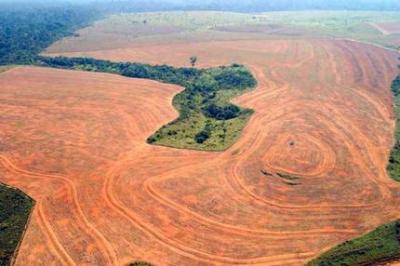
The Amazon globalisation formular

The AMAZON FOREST since TIME IMMEMORIAL is reduced to PILLAGE.. UGLINESS.. NEVER TO BE A RAIN FOREST FOR CENTURIES


(a)JULIES COMMENTS :Is globalisation the rich mans alter ego ????
Max Webers perspective confirms my view of rich man's alter ego
Adam Smith's invisible hand is no longer invisible
View my sociology research: View at bottom of page
Anti globalisation player: Green peace
(b)Brazilian authorities seize illegally logged Amazonian timber
The Brazilian environmental agency seems to have finally woken up to the problem of illegally logged Amazonian timber leaving their shores.The companies connected with the shipment were slapped with fines totaling over 100,000 Euros.It’s the first time in two years that the Brazilian authorities have taken this sort of action, and it follows Greenpeace’s recent blockade at the French port of Caen.
And thanks to companies slashing and burning the rainforest in order to make a quick profit, the rate of deforestation and resulting greenhouse gas emissions, are actually increasing. Brazil is now the fourth largest emitter of greenhouse gases, behind the US, China and Indonesia.
Rogue companies operating illegally are driving much of this devastation. Greenpeace’s report – ‘A Future for Forests’ estimates that up to 80 percent of the timber from the Amazon rainforest is illegally logged. And, it isn’t just the environmental impact of these companies’ activities that is worrying. Illegal logging encourages land grabbing by farmers and speculators, and fuels corruption and violence.
http://www.greenpeace.org/international/news/brazilian-authorities-seize-il
(c) Cuff, E. C, Sharrock, W. W, and Francis, W. D. Perspectives in Sociology: Max Weber page 42 states
For Weber the capitalist business has two characteristics:
(1)capitalist business was kept in continuous operation and existence
(2)this ceaseless operation was in the service of the relentless accumulation of profit
Summary of Rational capitalism or western capitalism
The unrelenting commitment to means-ends makes rational capitalism what it is.
(1)The capitalist business continues to accumulate profit even thought there is no practical need for it, even though the level of profits exceeds what its recipients can ever spend.
(2)Rather than being acquired for use, seemingly wealth is sought for its own sake, and the aim of business is the ceaseless expansion of profits.
(3)This pursuit of ever greater profit is not driven by greed or grandiosity of ambition. Instead it is seen as morally righteous, with the resultant profit being the just desserts of the capitalists of their industry

Tuesday, April 15, 2008

Peace Doves in the Patriachial War System


Julies comments: Sudan : scorched earth, villages burned to the ground, children orphaned, mothers forced to leave their sick children behind, 1.2 million refugees living in borderless camps, Sudanese men who send their women out to gather firewood because Rape is the lesser evil than being the men being Murdered by the rebels ..
Sudan is The Violence that Knows No Borders , the Violence that Has No Conscience.
United Nations :
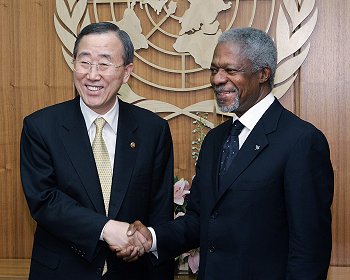
Two men who carry the olive branch to each African President
Secretary-General Ban Ki-Moon and Secretary General Kofi Annan

Wednesday, March 12, 2008

APEC leaders Sydney declaration on climate change, energy security and clean development is available on http://www.malcolmturnbull.com.au/Pages/Article.aspx?ID=96945
Why is this declaration released as a separate document to the Fifteenth APEC Economic Leaders Meeting report ??

APEC: Sydney, Australia Report..go to
Climate Change, Energy Security and Clean Development
4. We addressed the challenges of climate change, energy security and clean development. Our resolve on this issue is outlined in a separate statement issued at this meeting.

Monday, March 10, 2008

The Not So Humble Cocoa Beans. Or to put it in other words SLAVE TAINTED CHOCOLATE: It is estimated more than 100,000 children work in the Ivory Coast's cocoa industry under "the worst forms of child labor," and that about 10,000 are slaves. Available http://www.theage.com.au/articles/2007/11/03/1193619205911.html
Reverend Tim Costello is sounding the alarm bells. I cannot find his TV news report on the internet. What kind of world are we creating ??

Thursday, March 6, 2008

JOURNAL ENTRY 3
Towards Zero Waste Strategy
http://www.sustainability.vic.gov.au/resources/documents/Byteback_270208.doc
I found this information on the Sustainability Victoria site: Byteback; a service that will salvage glass and metal parts in computers. BYTEBACK is a free service to householders. I understand this process to be sustainability covenants but do the householders know of this new policy by the Brumby Gov ?? Did we get a media release of this fact ??

The first media release "Towards Zero Waste Reduction"was in 2005
http://www.dpc.vic.gov.au/domino/Web_Notes/newmedia.nsf/955cbeae7df9460dca256c8c00152d2b/17af66a423fe7659ca257073000564aa!OpenDocument (a) Phasing out of plastic bags by all retailers by 2008 and increase recycling of product packaging to 65 per cent by 2010 (b) Keep Australia Beautiful, Clean site program, $211,000;

I thought that I really disliked Marxism but this is the best quote ever for sustainability http://www.greenleft.org.au/2007/735/38045
Quote from Karl Marx.. "Even an entire society, a nation, or all simultaneously existing societies taken together”, Marx stated, “are not owners of the earth. They are simply its possessors, its beneficiaries, and have to bequeath it in an improved state to succeeding generations as boni patres familias [good heads of the household].”

julie's analysis : One end result of Economic Globalisation is enormous waste landfill sites. End cycle sustainability is now incorporated in all Victorian State and local council strategic planning. Functionalism tells us that we need to keep looking at the cycle of value consensus, equilibrium and homeostasis (the actions we take to return to the state of equilibrium).

I like that fact that reusing computer elements works in a contradictory manner to capitalism and globalisation. I understand that reusing the glass and metal components promotes the marxism theory of owning the means of capital, by reclaiming the elements to future production. I cannot find a media release on the new initiate BYTEBACK, free to householders.
***************************************************************

Thursday, February 28, 2008

JOURNAL ENTRY 2
GLOBALISATION IS IT GOOD OR BAD ?
Julies analysis : The globalisation debate is so complex: ...Apex want a pro development strategy....Universities debate that globalisation must be balanced against poverty levels.... Oxfam Australia warn that global warming (result of economic globalisation Marxism: exploitation and class struggle ) will affect the poorest countries most.
How do we measure if globalisation is benefitting the poorest countries ??

APEC Report August 2007 : Building a Pro-Development Global Strategy on Climate Change by Alan Oxley Available http://www.apec.org.au/docs/07_WGR.pdf
The challenge is to forge a climate change strategy that is pro-development. The strategy is divided broadly between those who favor global regulation versus those supporting global cooperation.
Globalization for Whom? - Globalization Good for Whom?
Available http://hbswk.hbs.edu/archive/3029.html
Does Globalisation work for the world's poor? That is the central question around which the debate over globalization—in essence, free trade and free flows of capital—revolves......Poverty is now the defining issue for both sides.
Oxfam Australia Available http://www.oxfam.org.au/campaigns/
Climate change will affect everyone, but it will affect poor people in developing countries the most. Poor communities already live on the front lines of pollution, disaster, and the degradation of resources and land.
**************************************************************

Wednesday, February 20, 2008

JOURNAL ENTRY 1
NZ PM wins UN award for climate policies
NEWSPAPER CLIPPING : The UN said Miss Clark's policies of introducing an emissions trading scheme and a national energy efficiency and conservation strategy were blazing new trails for sustainability and the fight against climate change. Her Government was also "achieving substantial work on environmental protection, from forestry and agriculture to improving public awareness and boosting private sector involvement in sustainability", the UN said.
GO TO CLICK RETURN ARROW TO RETURN TO MY PAGE

Analysis Climate change : Feminist perspective Wikipedia at http://en.wikipedia.org/wiki/Marxist_feminism
defines Marxist feminism is a sub-type of feminist theory which focuses on the dismantling of capitalism as a way to liberate women. Marxist feminism states that capitalism, which gives rise to economic inequality, dependence, political confusion and ultimately unhealthy social relations between men and women, is the root of women's oppression in the current social context.

Julies analysis: Feminist perspective is Global Capitalism (marxism over production) has caused climate change with every ecosystem on planet earth under stress. NZ's female prime minister (APEC Member)is leading the way forward on Climate Change by challenging male super structures (marxism) of ecomonic policies and economic mangement, implementing education programs (functionalism)and re-balancing the economic inequalities (unemployment and loss of industries) that arise when forestry and agricultural industries are over capitalised. Sustainablilty (functionalism consensus) is achieved through educating the private sector.
****REFERENCES for FUTURE ANALYSIS ONLY****
The Silk Road : Luxury Trade
The historical Silk Road is probably somewhere around 2000 years old. From its inception, the Silk Road was the coronary artery for the Roman Empire’s hunger for luxury goods from the East, such as silk, jade and gems. This demand was in fact so large that it drained hefty sums of gold out of Rome, contributing to the bankruptcy of the Roman economy and eventually the downfall of the empire itself
Paper money: The Polos were established merchants, but were astonded by the idea of substituting gold and silver with paper. The practice was unknown in the Europe of the 13th century.
Feminist perspective : http://www.petitiononline.com/wfuacc/petition.html
Not the exact copy of newspaper article clipping from New York Times
FIFTEENTH APEC ECONOMIC LEADERS’ MEETING
“STRENGTHENING OUR COMMUNITY, BUILDING A SUSTAINABLE FUTURE”Sydney, Australia, 9 September 2007
**************************************************************************
APEC :Queensland, Australia
14th Ministerial Statement on Climate Change on page 2
14th Apec Minsterial Statement 2-3 August 2007 go to
Energy efficiency, based on advances in education, science and technology, is one of the most cost-effective means for achieving these objectives. As finance ministers, we play a key role in developing and linking market-based economic policy responses to these challenges.
***************************************************************
The United nations
Economic and Social Council (ECOSOC)
The Council is the principal organ to co-ordinate the economic and social work of the U.N. and its specialized agencies. It makes recommendations and initiates activities relating to world trade, industrialization, natural resources, human rights, the status of women,population, social welfare, education, health and related matters, science and technology and many other economic and social questions.ECOSOC has 54 members elected for three-year terms by the General Assembly.